The investigation of landscape, nature and ecology in contemporary art has its roots, in part, in the legacy of Romanticism and the search for man's place within the world.

Showing posts with label Nature illistration. Show all posts

Sunday, April 24, 2011

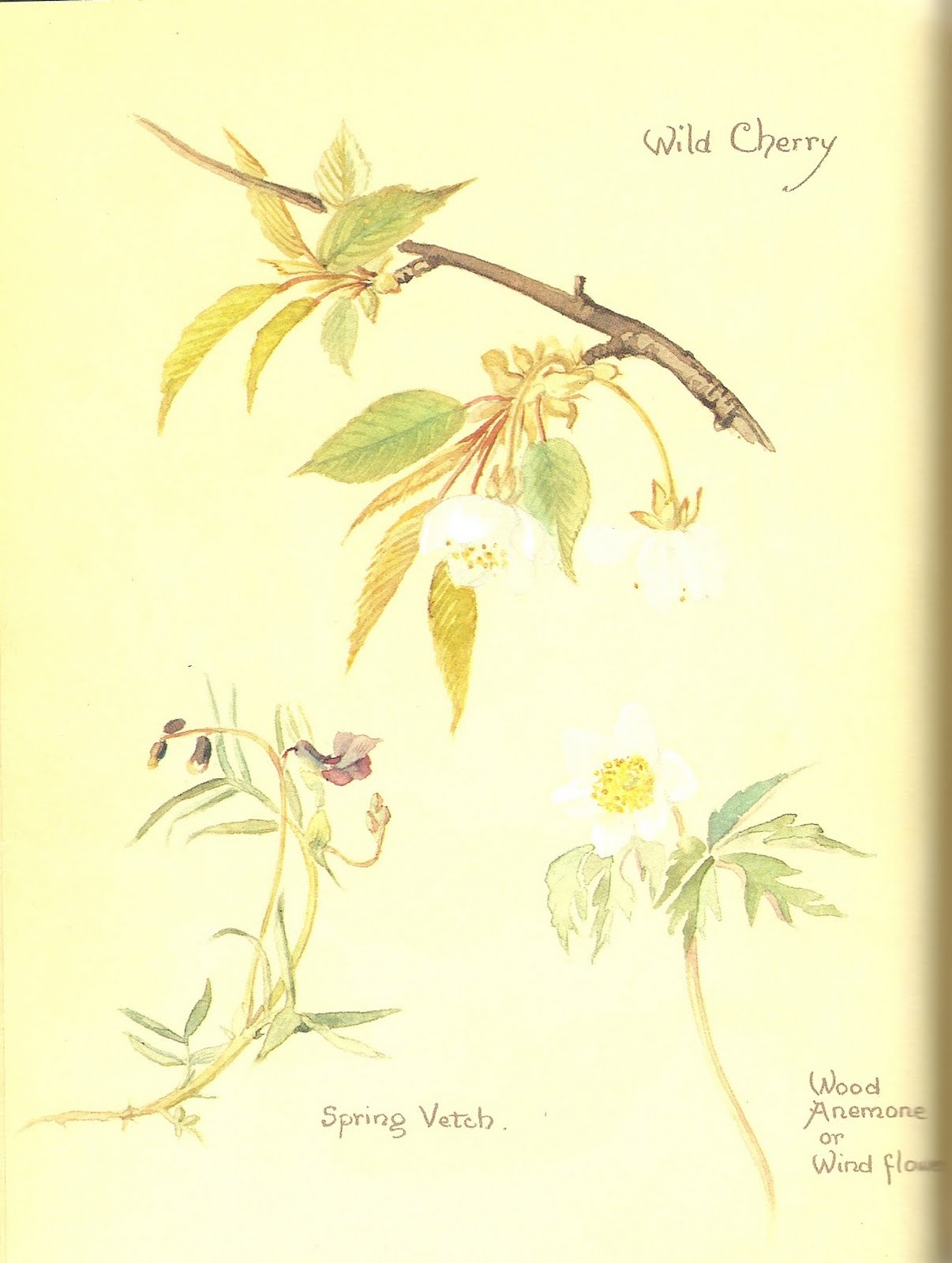
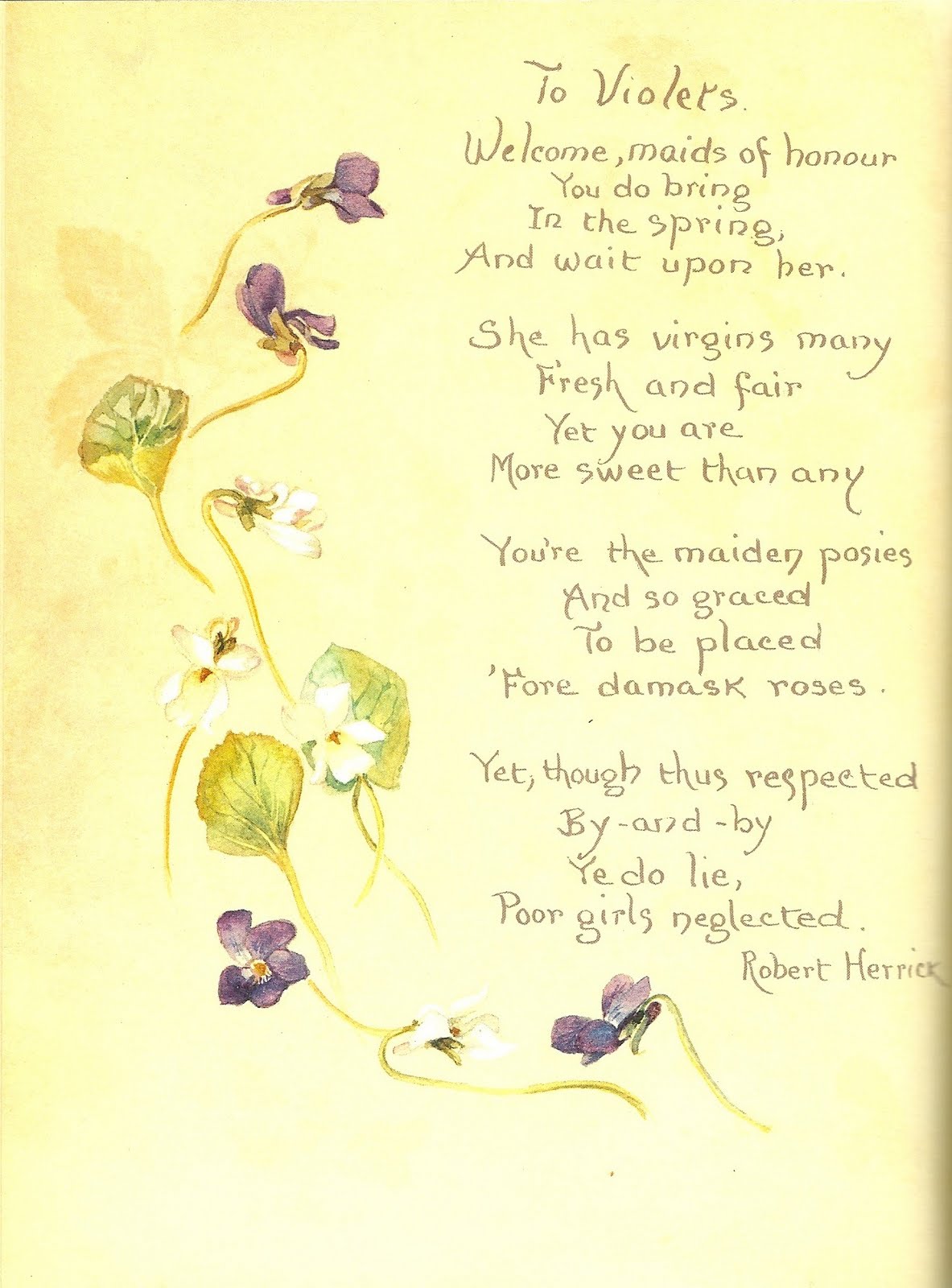
April - The Nature Notes of an Edwardian Lady - Edith Holden


Book Description

From the writer of "The Country Diary of an Edwardian Lady", these "Nature Notes" from 1905 feature a selection of Edith Holden's watercolours of birds, flowers and landscapes, together with journal extracts, anecdotes and poems.

Edith Blackwell Holden (1871–1920) was a British artist and art teacher, known in her time as an illustrator of children's books. Much influenced by the Arts and Crafts movement, she specialized in painting animals and plants. Holden was made famous by the posthumous publication, in 1977, of her Nature Notes for 1906 under the title The Country Diary of an Edwardian Lady. She was living in Kineton Green Road, Olton, Solihull in 1905-6 when she recorded the notes. The collection of seasonal observations, poetry, and pictures of birds, plants, and insects—which was never even considered for publication when it was composed—had the nostalgic charm of a vanished world seven decades later. It was a best seller.


All rights reserved by the individual artists.


Tuesday, March 29, 2011

Livres de Fleurs 1620


Botanical – La Flore Des Environs De Paris – (7)


Vintage French Botanical, pre-Revolution. Flore des Environs de Paris, 1776; Bulliard. Scan of 2 d image in the public domain believed to be free to use without restriction in the US.

http://vintageprintable.com/wordpress/vintage-printable-botanical-2/botanical-la-flore-des-environs-de-paris-7/

Sunday, March 13, 2011

Artist: John Miller


John Miller (1715-1790)
'Thistle sp.'
Plate from 'An Illustration of the Sexual System of Linnaeus'
Published in parts between 1770 and 1777
Engraving
Coloured by hand
Museum no. E.48-1892

The Swedish botanist Linnaeus (1707-78) was the first scientist to classify plants not according to the way people used them, but rather by the physical similarities between their reproductive parts. Once classified, each species was given a fixed two-part Latin name reflecting where in the plant world it belonged.

This print was made as plate for an English publication An Illustration of the Sexual System of Linnaeus. As the title suggests, there was a strict adherence to Linnaean principles: the plants were ordered in the volumes alphabetically by Latin name, while the dissections at the foot of the page emphasised the importance of the reproductive parts.

Linnaeus himself praised the illustrations, saying that they were 'more beautiful and more accurate than any that had been seen since the world began'.

Artist: Ernst Haeckle - fungus

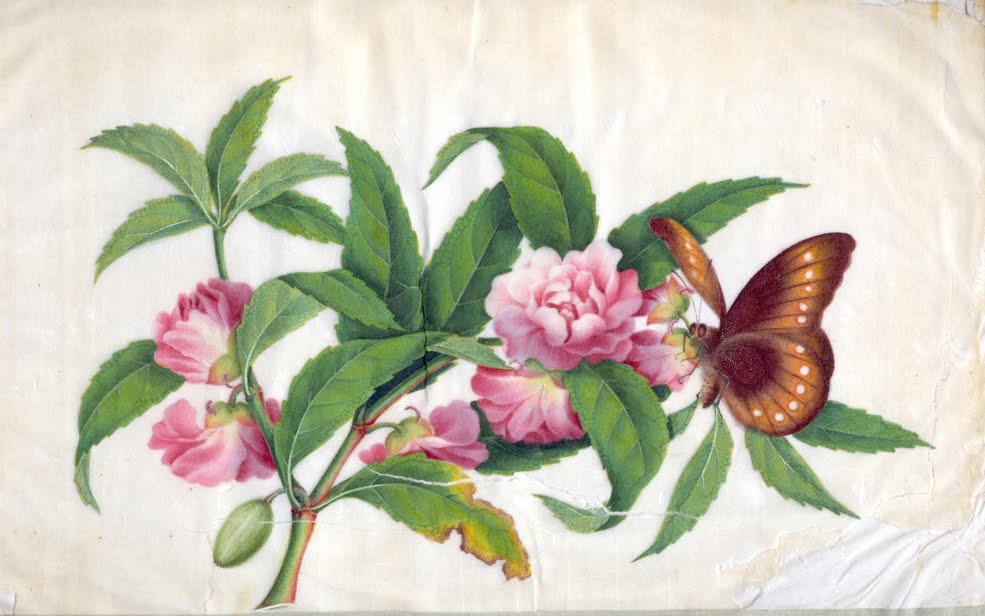
Chinese Botanical Paintings


Chinese Botanical Paintings,
Tetrapanax papyriferum (Hook.)Koch

265-420 A.D.
The earliest mention of the use of pith paper is thought to be during the Tsin Dynasty (265-420 A.D.). In the official records in the year of Jiann Kang "Jiann Kang Shyr Luh", it is mentioned that the emperor ordered servants to arrange flowers made from "Tung-tsaou".

http://www.huh.harvard.edu/libraries/Tetrap_exhibit/page2chinesebotanicals.htm

Artist: Thomas Taylor


1897-1898
Thomas Taylor (1820-1910)
Student's Hand-Book Of Mushrooms Of America Edible And Poisonous
Washington, A. R. Taylor, 1897-98
Farlow Library of Cryptogamic Botany

Thomas Taylor is credited with the introduction of plant pathology into federal agricultural research.

Born in Pertshire, Scotland, Taylor was interested and educated in a wide variety of subjects. He studied physics and chemistry at Glasgow University, art and drawing at the British School of design, and medicine at Georgetown University. His background in botany was largely self-taught.

Taylor was appointed to be the first Microscopist to the United States Department of Agriculture in 1871. There he was responsible for the first USDA publications on microscopic plant pathogens. One of Taylor's particular interests included pathogenic fungi. He published several descriptions of edible and poisonous mushrooms, with recipes. His Handbook of Edible and Poisonous Mushrooms was published in 1897.

Taylor was not particularly popular with his colleagues, and much of his work was disregarded due to his informal training in botany. Though his work in phytopathology was criticized for being small in scale, Taylor pursued his interests earnestly.

Artist: Rev. M.J. Berkeley


1860
Rev. M. J. (Miles Joseph) Berkeley (1803-1889)
Outlines Of British Fungology
London, L. Reeve, 1860.
Farlow Library of Cryptogamic Botany

Miles Joseph was born at Biggin Hall on the 1st April, 1803. He became attached to natural history from an early period, and his scientific tendencies, both zoological and botanical, were kept alive and vigorous when at Christ's College, Cambridge. During a summer residence at Loch Lomond in 1823, and at Oban in 1824, he made considerable collections of specimens of the lower forms of animals and plants. At this time he made the acquaintance of Captain Carmichael, a cryptogamic botanist, whose association with the young student must have been of considerable advantage.

Mr. Berkeley was admitted deacon and curate of Stibbington, near Wansford, on December 1st, 1826, and here he was ordained priest on December 23rd, 1827. During this time he made a considerable number of drawings of fungi and began to publish his numerous cryptogamic publications.

In 1879 he was elected Fellow of the Royal Society, and shortly after presented his extensive collection of fungi, amounting to upwards of 10,000 species, to Kew. It has been estimated that it contains 4,866 type specimens named by himself, and that Mr. Berkeley must have named in all nearly 6,000 species.

Mushrooms - William A. Murrill


William A. Murrill (1869-1957)

Edible and Poisonous Mushrooms
New York, The author, 1916.
Farlow Library of Cryptogamic Botany

Figure 32 - Venenarius phalloides (Amanita phalloides).


William Alphonso Murrill was a mycologist, taxonomist, writer, and authority on the fleshy fungi (Basidiomycetes). He collected over 70,000 specimens of fungi in North and South America, Mexico, and the Caribbean. Using the American Code of nomenclature Murrill identified and described many new genera and species and made nomenclatural revisions of existing taxa that were variously criticized and praised by American mycologists.

Murrill published over five hundred scientific articles on a wide range of botanical subjects. Murrill founded and served as editor of Mycologia (1909-1924) and the Journal of the NYBG (1906-1908), and was a contributor to North American Flora. In 1924 he retired both from the Garden and from professional life altogether. During the 1930's he became associated with the University of Florida in Gainesville, where he resumed mycological study and publication until his death in 1957.

Artist: Joseph Bridgeham


Joseph Bridgham (1845-1915)
unpuplished watercolor and pen & ink drawing
Farlow Archives of Cryptogamic Botany

Watercolor - incorrectly identified as Amanita phalloides pale form but probably Amanita mappa
Pen & Ink - identified as Amanita phalloides

Joseph Bridgham achieved recognition in the scientific world as an entomologist and a nature artist. Much of Bridgham's work was commissioned by the United States government. In addition Bridgham worked for colleges and institutions throughout the United States as well as other countries. He worked with Professor William Farlow from 1889-1899 on the fungi of North America. During this period he also produced a set of illustrations of North America flowers for Columbia College in New York.

Thursday, January 27, 2011

Artist: Orra White Hitchcock


Orra White Hitchcock (1796–1863): An Amherst Woman of Art and Science


January 28 - May 29, 2011

Bassett and Daniels Galleries


Orra White Hitchcock (1796–1863): An Amherst Woman of Art and Science, a special exhibition that brings to light the little-known art of one of the Connecticut River Valley’s earliest female artists, will open on Friday, Jan. 28, at the Mead Art Museum of Amherst College.

The wife of Edward Hitchcock (1796–1864)—a geologist, theologian, professor and for a decade president of Amherst College—Orra White Hitchcock produced dozens of striking watercolors of native plants, picturesque lithographs of the Connecticut and Deerfield rivers, symbolic compositions and drawings of prehistoric fossils as well as large, colorful geological designs for her husband’s lectures. Self-taught, she rose to become the principal female illustrator of her generation in the United States. Exhibition co-curators Robert L. Herbert, professor emeritus of humanities at Mount Holyoke College, and Daria D’Arienzo, head of Amherst’s Archives and Special Collections from 1984 to 2007, have uncovered previously unknown drawings and many new facts that fill out the work and life of this singular woman, who considered herself not an “artist” but a mother, wife, and teacher who made illustrations.

“Orra White Hitchcock deserves to be better known,” said Elizabeth E. Barker, the museum’s director and chief curator. “We hope that this exhibition will help to secure her important position among our region’s most accomplished creative women of the nineteenth century. In fact, visitors interested the exploring the historical context of Orra’s achievement could easily make a day of it, by combining an excursion to the Mead with stops at other women’s history sites here in the Connecticut River Valley, including the Emily Dickinson Homestead (in Amherst) and the Harriet Beecher Stowe Center (in Hartford).”

Comprising over 100 works, Orra White Hitchcock (1796–1863): An Amherst Woman of Art and Science runs through Sunday, May 29, and is accompanied by a generously illustrated catalogue featuring a biographical and interpretive essay by Herbert and D’Arienzo, as well as contributions by Elizabeth Farnsworth, senior research ecologist with the New England Wild Flower Society, and Tekla Harms, professor of geology at Amherst. The catalogue is available through the Mead’s bookshop or by contacting the University Press of New England.

A selection of images of works included in the exhibition and a concise biographical chronology are available to members of the press by contacting Caroline Hanna in Public Affairs at 413/542-8417 or channa@amherst.edu.

Information about special programs accompanying the exhibition is listed here.

Information about Historic Deerfield's related lecture by Robert L. Herbert is here.

Orra White Hitchcock (1796–1863): An Amherst Woman of Art and Science is made possible by generous support from The Hall and Kate Peterson Fund. The Charles H. Morgan Fund and the Wise Fund for Fine Arts supported the publication of the accompanying catalogue.

The Mead Art Museum houses the art collection of Amherst College, totaling more than 16,000 works. An accredited member of the American Association of Museums, the Mead participates in Museums10, a regional cultural collaboration. During the academic term, the museum is open Tuesday through Thursday and Sunday from 9 a.m. to midnight and from 9 a.m. to 5 p.m. Friday and Saturday. For more information, please visit the museum’s website, www.amherst.edu/museums/mead, or call 413/542-2335.


UPNE - Orra White Hitchcock: Robert L. Herbert

Wednesday, January 19, 2011

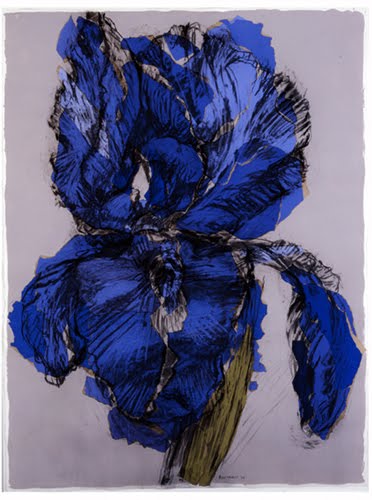
Artist: Williams Kentridge - Dutch Iris Images

Dutch Iris
Etching, aquatint – 3 plates, 14 colors
Paper : BFK Rives (300gsm)
40 x 32 in. - 101.6 x 81.28 cm.
1994

Dutch Iris 2
Etching and aquatint, 16 colors
Paper : VĂ©lin d’Arches Blanc
46 1/2 x 31 1/2 in. - 118.11 x 80.01 cm.
1996

Iris
Drypoint, etching with 2 handcolored plates
43 3/4 x 33 3/4 in.
111.13 x 85.73 cm.
1994

"IRIS II"

2005

ARCHIVAL PIGMENT PRINT ON COTTON RAG PAPER

EDITION 36/50

SHEET SIZE : 110,5CM X 156,5CM


Iris
Charcoal, gouache and collage on paper: Velin d'Arches Blanc (310gms)
63 x 47 1/5 in. - 160.02 x 119.89 cm.
1994


Iris
Dimensions: 102,5 by 78cm
Medium: drypoint etching, with two hand-coloured plates


Dimensions:
Plate size: 108 by 59cm
Medium: Drypoint with 2 aquatint plates in 14 colours
Artwork is signed
Edition number: II from an edition of IV


Some of these images can be found at:
Priska C. Juschka Fine Art
547 West 27th Street
2nd Floor
New York, NY 10001

(between 10th & 11th Ave.)

http://www.priskajuschkafineart.com/index.php

Monday, January 17, 2011

Artist: Charley Harper - Some Bird Images


Charley Harper (August 4, 1922 - June 10, 2007) was a Cincinnati-based American Modernist artist. He was best known for his highly stylized wildlife prints, posters and book illustrations.

Born in Frenchton, West Virginia in 1922, Harper's upbringing on his family farm influenced his work to his last days.


He left his farm home to study art at the Art Academy of Cincinnati, and won the academy’s first Stephen H. Wilder Traveling Scholarship.


In a style he called "minimal realism", Charley Harper captured the essence of his subjects with the fewest possible visual elements. When asked to describe his unique visual style, Charley responded:

When I look at a wildlife or nature subject, I don’t see the feathers in the wings, I just count the wings. I see exciting shapes, color combinations, patterns, textures, fascinating behavior and endless possibilities for making interesting pictures. I regard the picture as an ecosystem in which all the elements are interrelated, interdependent, perfectly balanced, without trimming or unutilized parts; and herein lies the lure of painting; in a world of chaos, the picture is one small rectangle in which the artist can create an ordered universe.